Synthetic Pitch vs Natural Pitch: The Battle of Benefits!
History and advantages of synthetic pitches
The first generation of artificial turf for sports fields dates back to the 1960s and was mainly used for hockey. The first synthetic football pitches appeared in England in 1980 with the second generation, but drew sharp criticism. There was even an enforced return to natural grass in the 1990s following major quality failures and numerous safety problems. Since the 2000s, FIFA has been trying to improve playing conditions on synthetic pitches by imposing regulatory standards. The third generation of artificial turf has been considerably redesigned.
What are the main arguments in favour of synthetic turf?
- Resistance to weather conditions
- More frequent use
- A financial advantage
This last point needs qualifying, however, because a synthetic pitch also requires maintenance – something its supporters often gloss over – and it is not everlasting (the lifespan of a synthetic pitch is 10 to 15 years). There is therefore no significant saving (for equal turf quality).
The advantages of natural grass
The natural solution needs no advertising: it is favoured by amateurs and professionals alike. The intrinsic advantages of natural pitches:
- Environmentally friendly and carbon neutral
- Beneficial to human health
- Unanimously preferred by players
- Better cost-effectiveness
The last point also has to be weighed against various parameters, notably how the pitch is used. Note that choosing a robotic mower considerably increases the effective cost-effectiveness of natural grass. The investment cost of a synthetic pitch is around €500,000, while the investment cost of a natural pitch maintained by a robot is around €15,000. Discover all the advantages of the mowing robot for sports field maintenance.
Moreover, the environmental criterion should not be taken lightly. Numerous studies report the health risks posed by the chemical components of artificial turf. In addition, recycling a synthetic pitch carries a substantial cost.
Match statistics and injuries
Measuring the impact of synthetic turf on the game is no easy task. Between scattered samples, the difference between players used to the surface and newcomers, pressure from investors, and so on. Nevertheless, here are the main findings:
- The type of pitch has no effect on the quality of passing. There are, however, statistically more passes on synthetic pitches. Attack proves better on synthetic, but the number of crosses is higher on natural turf. As for match statistics, against all expectations, the two solutions are equal.
- Those used to natural pitches reportedly find synthetic physically harder to play on. In particular, it would be more difficult to cover the pitch without the ball; could this be linked to the higher number of passes? Furthermore, players familiar with grass note a lack of precision and ball control on synthetic turf
As for the effect of the pitch on injuries, the debate is lively.
- There is a wealth of studies, and some show that certain types of injury – ankle sprains and skin lesions – are more common on synthetic pitches. However, most agree that there is no overall difference.
Conclusion: back to the centre spot, or a false impression?
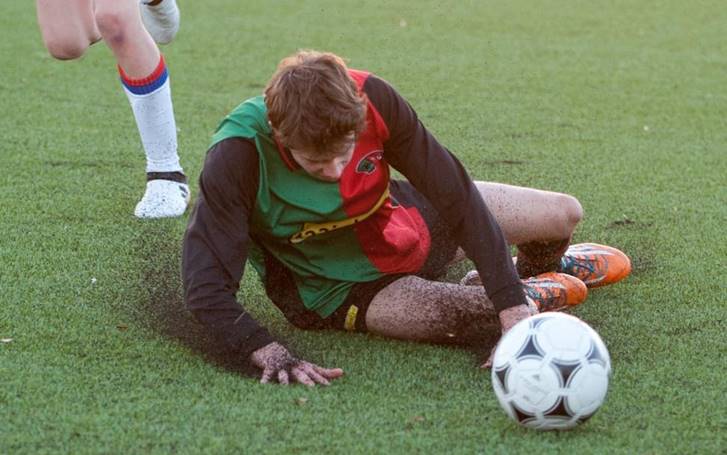
It is a close match, influenced by many factors. Let us remember that artificial turf is used as an alternative to natural grass. The third generation has fixed the major known drawbacks of artificial pitches. Even so, natural grass still wins the preference of players and coaches.
Finally, the cornerstone of both solutions is pitch maintenance. The quality of both natural and artificial turf (determined in particular by the type of infill) will determine the level of satisfaction and the value obtained from the investment.
Curious to learn the secrets of football pitch maintenance and the latest technological advances in the field? Read our football pitch case study and visit the Maintenance section of the blog for all the information on maintaining natural turf.